Craft Documentation Research (CRD)
Overview
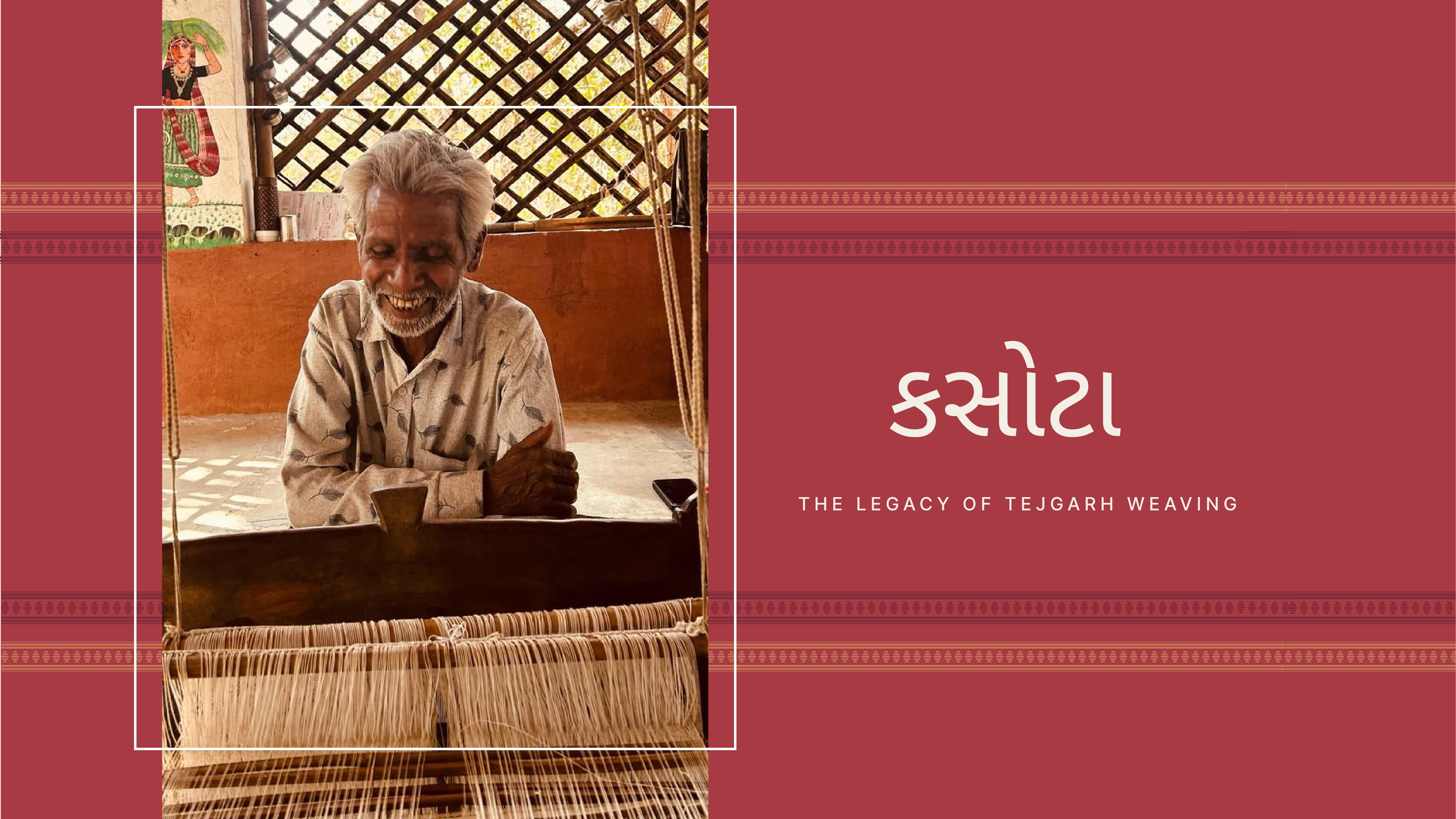
Craft Research Documentation: KASOTA WEAVING
Project Overview
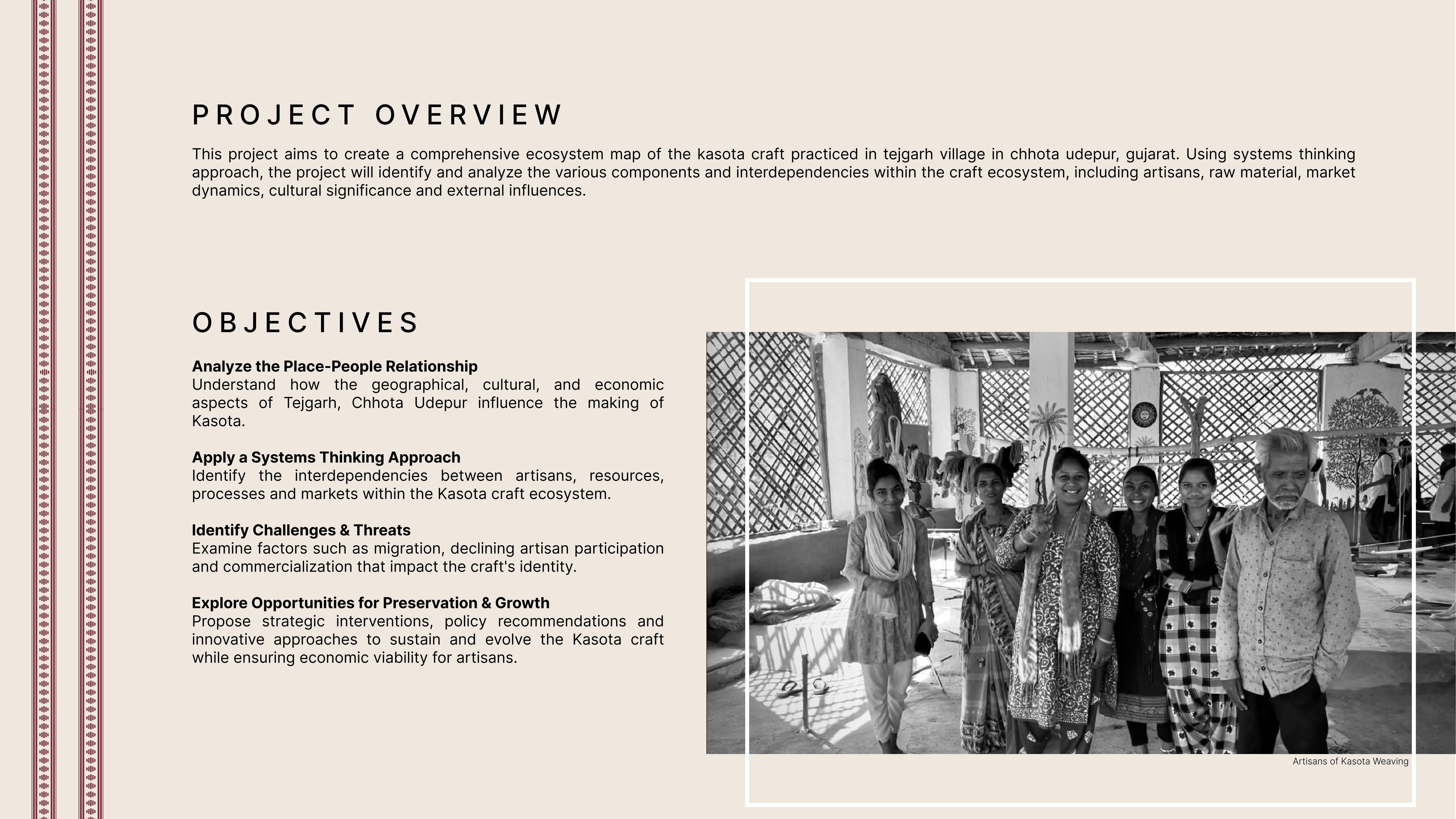
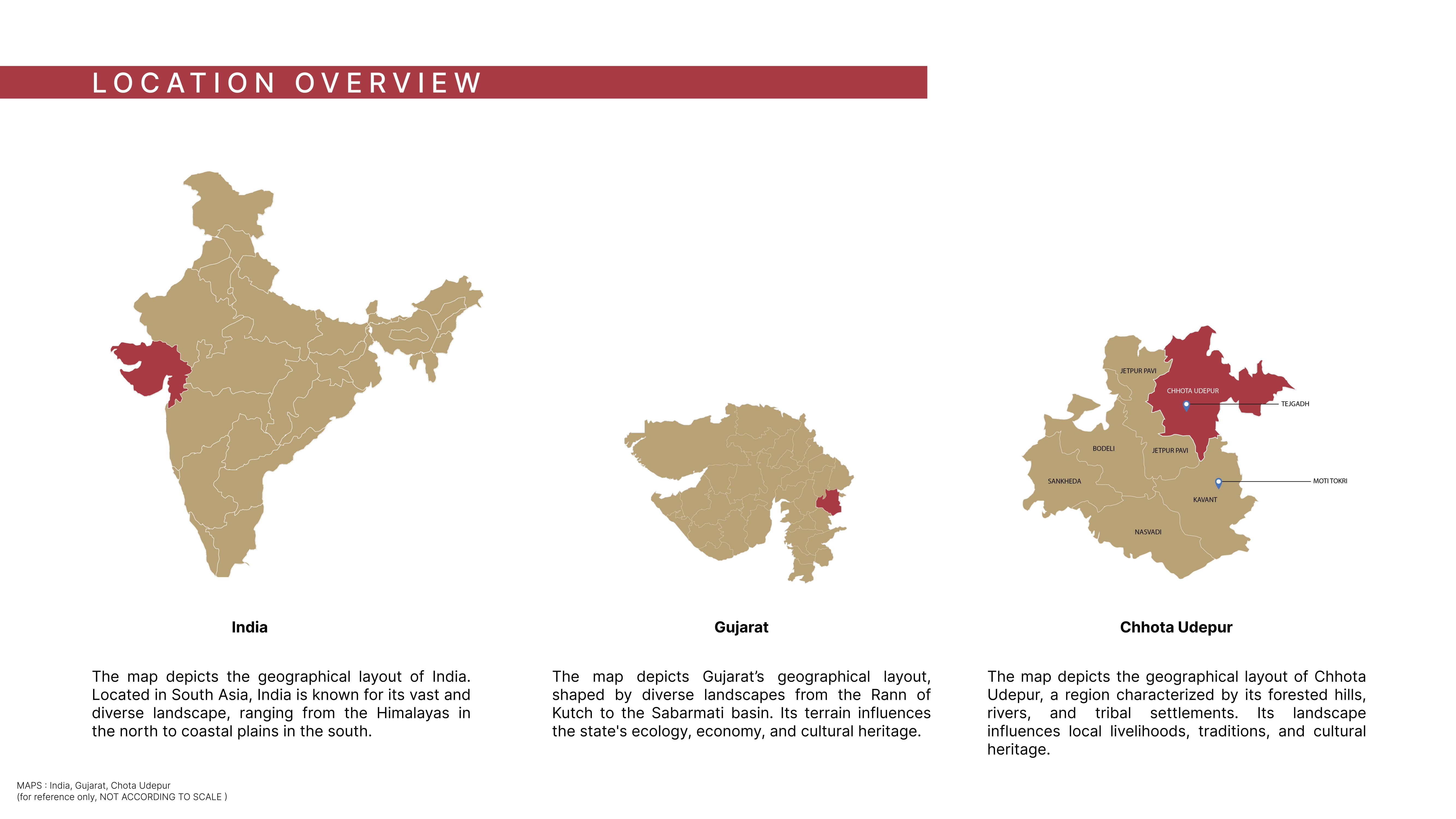
The "Craft Research Documentation: KASOTA WEAVING" project is an in-depth exploration of the traditional Kasota weaving craft, approached through a systems thinking and design perspective. The core objective was to document and analyze the interconnected cultural, material, and technological components that sustain this artisanal weaving tradition. The project aims to not only preserve craft knowledge but also to identify opportunities for innovation and user-centered design interventions that can support the community of weavers and enhance the craft's relevance in contemporary markets.
Systems Thinking Approach
Applying systems thinking, the project examined Kasota weaving as a complex ecosystem where artisans, materials (fibers, dyes), tools, socio-cultural practices, and market dynamics interact dynamically. The documentation focused on mapping these relationships to understand how changes in one part of the system (such as the introduction of new materials or market demands) affect the entire weaving practice. This holistic view informed the design strategy to ensure that any interventions or design solutions respect and enhance the system integrity rather than disrupt it.
Design Lens
From a design and UI/UX perspective, the research served as a foundational framework to inform solutions aimed at:
Enhancing knowledge sharing and preservation through digital platforms that connect weavers, designers, and consumers.
Designing user experiences that communicate the rich heritage and craftsmanship behind Kasota weaving, fostering appreciation and stronger market demand.
Identifying pain points in the production and marketing process to inform supportive tools or platforms, improving economic sustainability for weavers.
Key Activities and Methods
Extensive field research and ethnographic study directly with Kasota weavers to capture experiential insights, workflows, and challenges.
Visual documentation and storytelling through photos, sketches, and detailed process mapping to create a rich narrative of the craft system.
System mapping exercises to identify key nodes, feedback loops, and leverage points within the weaving ecosystem.
Collaborative workshops with stakeholders (artisans, designers, cultural experts) to co-create user-centered design opportunities grounded in the research.
Outcomes and Impact
A comprehensive archival resource that preserves Kasota weaving knowledge digitally, serving both educational and cultural preservation purposes.
Strategic insights and design recommendations aimed at empowering the weaving community through technology and market access interventions.
A system-informed design framework that can be adapted for other craft traditions to foster sustainable cultural and economic development.
Takeaway
This project highlights the power of combining systems thinking with design research and UI/UX principles to approach craft preservation and innovation in a respectful, sustainable, and effective manner. By viewing Kasota weaving as a living system, design solutions can be thoughtfully crafted to amplify its cultural legacy while opening pathways for future growth and resilience.
Categories
Research Document
Date
Nov 4, 2025
Client
NIFT Gandhinagar
Craft Documentation Research (CRD)
Overview
Craft Research Documentation: KASOTA WEAVING
Project Overview
The "Craft Research Documentation: KASOTA WEAVING" project is an in-depth exploration of the traditional Kasota weaving craft, approached through a systems thinking and design perspective. The core objective was to document and analyze the interconnected cultural, material, and technological components that sustain this artisanal weaving tradition. The project aims to not only preserve craft knowledge but also to identify opportunities for innovation and user-centered design interventions that can support the community of weavers and enhance the craft's relevance in contemporary markets.
Systems Thinking Approach
Applying systems thinking, the project examined Kasota weaving as a complex ecosystem where artisans, materials (fibers, dyes), tools, socio-cultural practices, and market dynamics interact dynamically. The documentation focused on mapping these relationships to understand how changes in one part of the system (such as the introduction of new materials or market demands) affect the entire weaving practice. This holistic view informed the design strategy to ensure that any interventions or design solutions respect and enhance the system integrity rather than disrupt it.
Design Lens
From a design and UI/UX perspective, the research served as a foundational framework to inform solutions aimed at:
Enhancing knowledge sharing and preservation through digital platforms that connect weavers, designers, and consumers.
Designing user experiences that communicate the rich heritage and craftsmanship behind Kasota weaving, fostering appreciation and stronger market demand.
Identifying pain points in the production and marketing process to inform supportive tools or platforms, improving economic sustainability for weavers.
Key Activities and Methods
Extensive field research and ethnographic study directly with Kasota weavers to capture experiential insights, workflows, and challenges.
Visual documentation and storytelling through photos, sketches, and detailed process mapping to create a rich narrative of the craft system.
System mapping exercises to identify key nodes, feedback loops, and leverage points within the weaving ecosystem.
Collaborative workshops with stakeholders (artisans, designers, cultural experts) to co-create user-centered design opportunities grounded in the research.
Outcomes and Impact
A comprehensive archival resource that preserves Kasota weaving knowledge digitally, serving both educational and cultural preservation purposes.
Strategic insights and design recommendations aimed at empowering the weaving community through technology and market access interventions.
A system-informed design framework that can be adapted for other craft traditions to foster sustainable cultural and economic development.
Takeaway
This project highlights the power of combining systems thinking with design research and UI/UX principles to approach craft preservation and innovation in a respectful, sustainable, and effective manner. By viewing Kasota weaving as a living system, design solutions can be thoughtfully crafted to amplify its cultural legacy while opening pathways for future growth and resilience.
Categories
Research Document
Date
Nov 4, 2025
Client
NIFT Gandhinagar
Craft Documentation Research (CRD)
Overview
Craft Research Documentation: KASOTA WEAVING
Project Overview
The "Craft Research Documentation: KASOTA WEAVING" project is an in-depth exploration of the traditional Kasota weaving craft, approached through a systems thinking and design perspective. The core objective was to document and analyze the interconnected cultural, material, and technological components that sustain this artisanal weaving tradition. The project aims to not only preserve craft knowledge but also to identify opportunities for innovation and user-centered design interventions that can support the community of weavers and enhance the craft's relevance in contemporary markets.
Systems Thinking Approach
Applying systems thinking, the project examined Kasota weaving as a complex ecosystem where artisans, materials (fibers, dyes), tools, socio-cultural practices, and market dynamics interact dynamically. The documentation focused on mapping these relationships to understand how changes in one part of the system (such as the introduction of new materials or market demands) affect the entire weaving practice. This holistic view informed the design strategy to ensure that any interventions or design solutions respect and enhance the system integrity rather than disrupt it.
Design Lens
From a design and UI/UX perspective, the research served as a foundational framework to inform solutions aimed at:
Enhancing knowledge sharing and preservation through digital platforms that connect weavers, designers, and consumers.
Designing user experiences that communicate the rich heritage and craftsmanship behind Kasota weaving, fostering appreciation and stronger market demand.
Identifying pain points in the production and marketing process to inform supportive tools or platforms, improving economic sustainability for weavers.
Key Activities and Methods
Extensive field research and ethnographic study directly with Kasota weavers to capture experiential insights, workflows, and challenges.
Visual documentation and storytelling through photos, sketches, and detailed process mapping to create a rich narrative of the craft system.
System mapping exercises to identify key nodes, feedback loops, and leverage points within the weaving ecosystem.
Collaborative workshops with stakeholders (artisans, designers, cultural experts) to co-create user-centered design opportunities grounded in the research.
Outcomes and Impact
A comprehensive archival resource that preserves Kasota weaving knowledge digitally, serving both educational and cultural preservation purposes.
Strategic insights and design recommendations aimed at empowering the weaving community through technology and market access interventions.
A system-informed design framework that can be adapted for other craft traditions to foster sustainable cultural and economic development.
Takeaway
This project highlights the power of combining systems thinking with design research and UI/UX principles to approach craft preservation and innovation in a respectful, sustainable, and effective manner. By viewing Kasota weaving as a living system, design solutions can be thoughtfully crafted to amplify its cultural legacy while opening pathways for future growth and resilience.
Categories
Research Document
Date
Nov 4, 2025
Client
NIFT Gandhinagar
Let'S WORK
Let'S WORK
TOGETHER
TOGETHER
CONTACT NOW
BASED IN INDIA, I AM AN INNOVATIVE DESIGNER AND DIGITAL ARTIST. MY PASSION FOR MINIMALIST AESTHETICS, ELEGANT, AND INTUITIVE DESIGN IS EVIDENT IN MY WORK.
BASED IN INDIA, I AM AN INNOVATIVE DESIGNER AND DIGITAL ARTIST. MY PASSION FOR MINIMALIST AESTHETICS, ELEGANT, AND INTUITIVE DESIGN IS EVIDENT IN MY WORK.
©2025 SAHIL DESIGN
GO BACK TO TOP